























































Would you like to lay a good base for your skills and knowledge in business and management, but do not wish to take the conventional way of going through college courses? The Online MBA in Business Analytics and Operations & Supply Chain Management at ATLAS SkillTech University provides a blend of management studies with the two disciplines, which are highly correlated with today's business data and operations.
The course combines Business Analytics, Operations Management, and Supply Chain Management to allow students to get acquainted not only with the data but also with the processes of the business.
The course offers various topics such as decision making with data, business analytics, operations, logistics, supply chain planning, and business strategies.
It can be considered by graduates and professionals interested in analytics, operations, supply chain management, and even overall business knowledge.
With this combination, learners will know how data can help to improve business processes, plan resources, estimate demand, and make better decisions.
Now, let’s look at the Online MBA in Business Analytics and Operations & Supply Chain Management from ATLAS SkillTech University and its key features, requirements, application procedure, teaching methodology, advantages, and career prospects.
Know More About the Online MBA in Business Analytics and Operations & Supply Chain Management at ATLAS
When business decisions come across data and the supply chain, what does it yield? This program looks at what is beyond spreadsheets or logistics and brings together both facets of contemporary business.
At the Online MBA in Business Analytics and Operations & Supply Chain Management at ATLAS, emphasis is put on how businesses can leverage the power of data, technology, process and strategy in making better decisions and managing operations effectively.
Use data for the benefit of business: Find out how analytics can help turn business data into useful information.
Gain a broad overview of operations: Discover how planning, process, resource, and personnel issues combine to ensure business operations function properly.
Trace the supply chain: Learn how materials sourcing and procurement lead to logistics and distribution of goods.
Consider more than just the numbers: Gain a management perspective on the relationship between analytics and business operations.
Understand the digital transformation of business: Learn how technology is shaping and transforming the management of operations and supply chains in organizations.
Gain business-related knowledge: Acquire knowledge related to areas including business analytics, operations, supply chain management, logistics and related management.
Key Highlights
The Benefits and Strengths
What do sales numbers, inventory, deliveries, and demand have in common? All of them are used by the business for making decisions. In fact, the combination of Business Analytics with Operations & Supply Chain Management is aimed at making students aware of ways to use data in order to optimize and plan the processes within a company.
Use business data for decision-making: Students will learn how to apply business data for analyzing demand, evaluating performance, and making decisions.
Get to know the business process: Learn about all the activities related to planning, purchasing, inventory management, logistics, and delivery.
Analyze customer demand: Understand how businesses use the data for analyzing demand of their customers.
Identify the problems with business processes: Analyze the business data to spot possible issues in its processes.
Link analytics and supply chain: Learn how sales, inventory, supplier, and logistics information can be linked for better planning.
Ideal Candidates
It should be noted that not all problems in business come with an immediate solution. Often, the problem requires knowing the data, the processes, and how things happen in between. The specialization can be considered a suitable option for those learners who would like to gain knowledge about different aspects of business at once.
Graduates who require more general business knowledge: It is a great option for graduates who would like to develop their knowledge of management as well as analytics and operations.
Business Analytics students: For those who like working with data and would like to learn how it can be applied to business decision-making.
Students who have an interest in operations: Students who find themselves intrigued by planning, processes, resources, and the inner workings of businesses should consider this specialization.
Supply chain professionals in the making: Students who are interested in procurement, inventory, logistics, distribution, and the processes involved in supply chains will find this specialization interesting.
Professionals currently working: Professionals who have been working in fields such as business, analytics, operations, logistics, or similar will find that they can benefit from this program and gain knowledge in management.
Students who are interested in connecting different business disciplines: Students who wish to connect data, operations, and supply chains rather than look at them separately may like this specialization.
Teaching Methodology
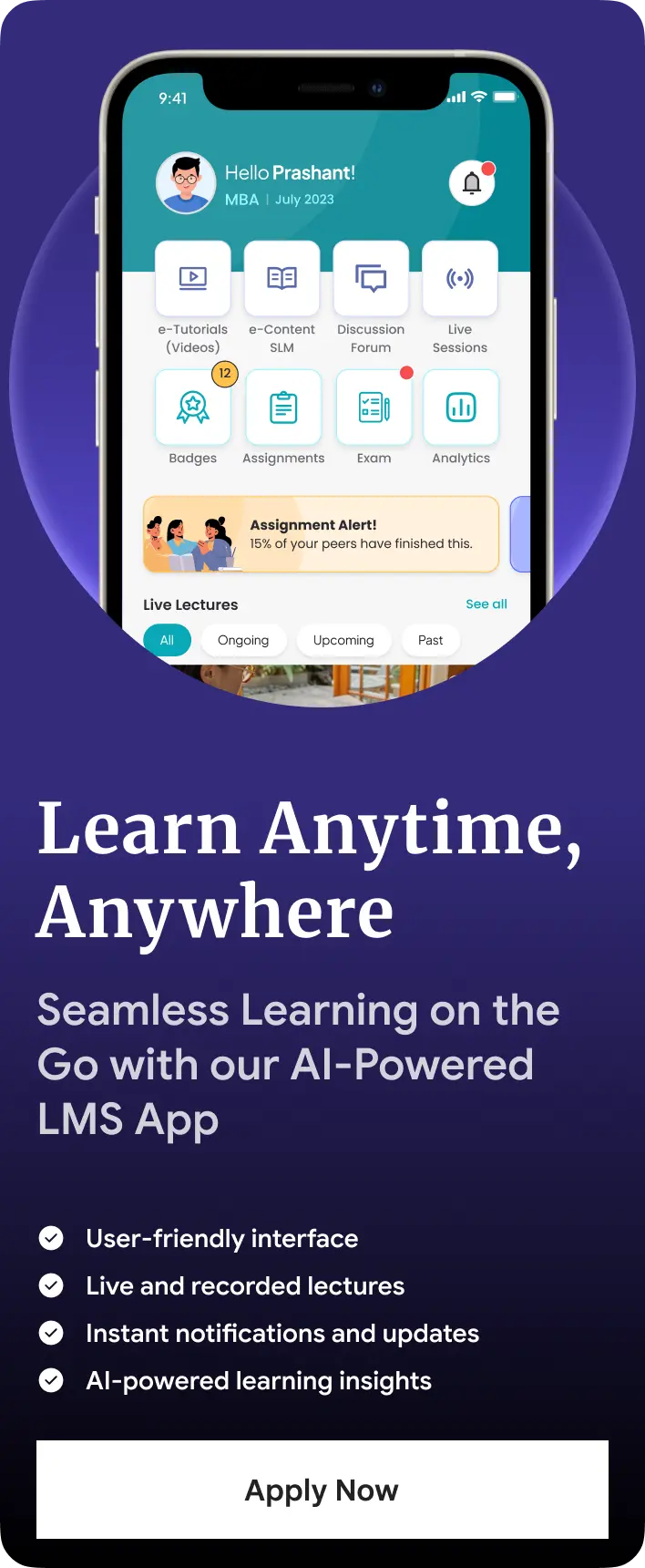
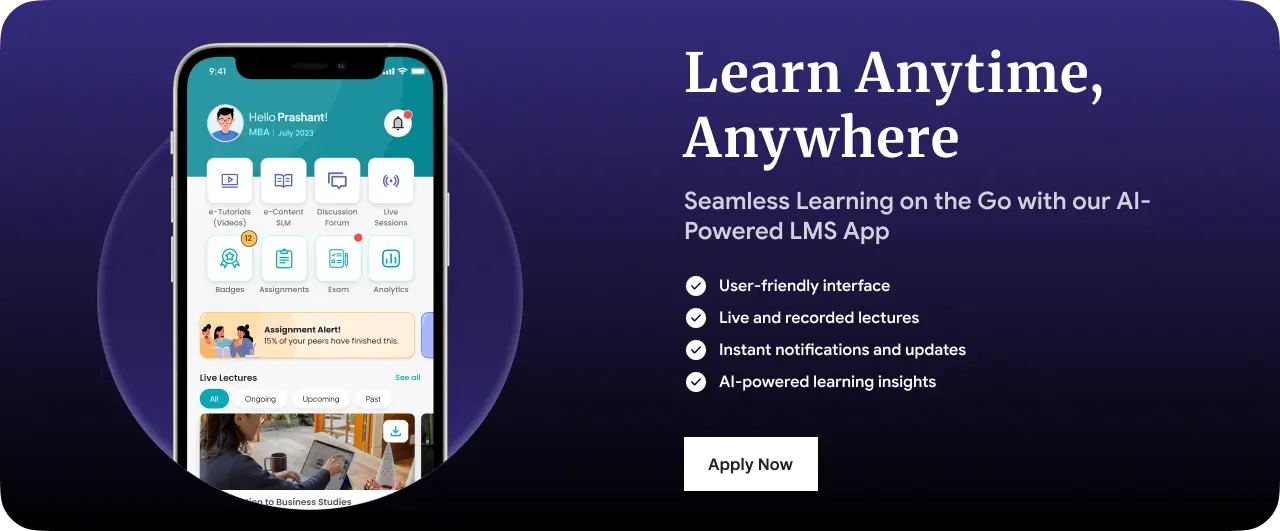
Online learning need not imply “view the video and work it out on your own.” Our MBA program employs the LMS learning framework that provides students access to all materials, practice, assessment, and interaction opportunities. The MBA program is also designed with live learning in mind.
Eligibility
Are you considering joining? The eligibility criteria are simple indeed. To be eligible for the Online MBA offered by ATLAS, one needs a degree and the necessary minimum marks.
Educational qualification: You should have a recognized bachelor’s degree from a recognized university or educational institute.
Minimum marks: At least 50% aggregate marks are required in your bachelor’s degree.
Academic qualification: Students having varied academic qualifications are eligible to apply if they fulfill the required criteria.
Working professionals: Since work experience has not been listed among the mandatory requirements, you can even be a fresh graduate or a working professional.
Foreign qualifications: Foreign qualified candidates may need to submit AIU Equivalence Certification, where necessary.
Admission Procedure
The online admission process takes you through a simple journey of steps. The current list of five steps of ATLAS, from counseling to LMS access, includes:
Step 1: Get online counseling: You can connect with ATLAS admission counselor for counseling and guidance prior to application.
Step 2: Registration online: Make the payment of ₹1,000 as registration fee, fill out the online application form, and upload all necessary documents as scanned color copies.
Step 3: Get your documents verified: Your documents will be checked by the ATLAS Admission Team. According to the university, this step will take place within 48 hours. If it is approved, then you will become eligible for admission.
Step 4: Pay your program fee: Once you are declared eligible, the program fee payment link appears in the admission portal. You need to make payment to secure your admission.
Step 5: Access to LMS and start your learning: After successful payment of the fee, you gain access to the Learning Management System (LMS) within 24 hours.
Career Outcomes and Their Advantages
So, what can you really do having mastered the knowledge of data analysis and business operations? This skill set will allow you to obtain some abilities that will be helpful to businesses when they must deal with information, optimize their processes, and make decisions.
Using data for business decision-making: Obtain an ability to analyze business data, find valuable information there, and use it when making decisions.
Understanding business operations: Acquire knowledge on how various activities, such as purchases, storage, manufacturing, and delivering products, are interconnected.
Optimizing business processes: Acquire knowledge on how to spot flaws and inefficiencies in the processes of the company.
Planning based on data: Develop an ability to use information about demand, resources, performance, etc. for planning business operations.
Resolving business problems: Apply analytical thinking combined with the knowledge of business operations when dealing with practical challenges.
Considering business processes from different perspectives: Acquire knowledge on how various aspects such as analytics, business operations, logistics, supply chain activities, and others are interrelated.
Working in a modern data-driven business environment: Develop a blend of managerial, analytical, and operational knowledge that will be useful in a data-driven world.