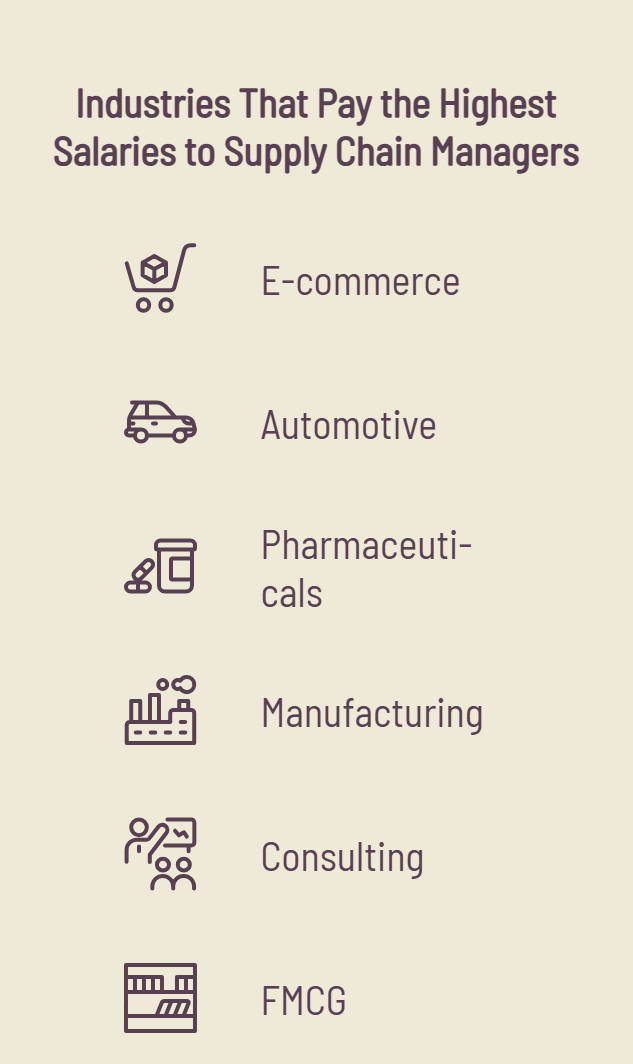
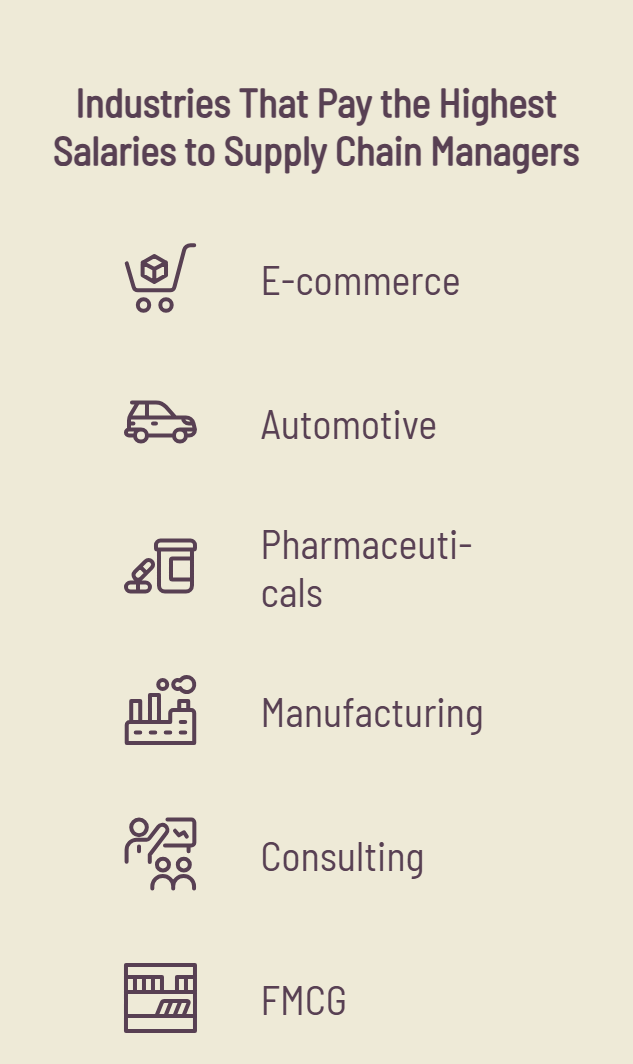
E-commerce: Online retail businesses need professionals to manage warehouse operations, inventory movement, order fulfilment and last-mile delivery.
Automotive: Vehicle manufacturers and component suppliers hire supply chain managers for sourcing, production planning and vendor coordination.
Pharmaceuticals: The industry requires careful inventory control, supplier management and distribution planning to maintain product quality and availability.
Manufacturing: Professionals manage raw material procurement, production schedules, storage and movement of finished goods.
Consulting: Supply chain consultants help businesses improve procurement, logistics, operations and cost management.
FMCG: Companies in this sector manage high-volume production and distribution, creating demand for professionals who can coordinate suppliers, warehouses and retailers.
What Factors Affect a Supply Chain Manager's Salary in India?
Two professionals working in the same role may receive different salaries because employers consider several aspects beyond job titles and years of experience.
Educational Qualifications: A degree in supply chain management, logistics, operations or business administration can provide relevant subject knowledge. An MBA may support progression towards managerial responsibilities.
Work Experience: Professionals who have handled procurement, vendor negotiations, inventory planning or large-scale logistics operations may qualify for more senior positions.
Industry: Sectors with complex sourcing networks, strict quality requirements or large distribution systems may offer different salary structures.
Company Size: Large organisations and multinational companies may have broader operations and more specialised management positions.
Location: Salary levels can vary across cities depending on industry presence, demand for skilled professionals and the cost of living.
Technical Knowledge: Experience with ERP platforms, supply chain analytics and planning tools can strengthen a candidate's profile.
If you are considering an online MBA to strengthen your management qualifications, read our guide on whether an Online MBA is valid in India to understand its recognition, acceptance and validity.
Which Skills Can Help Supply Chain Managers Earn Higher Salaries?
Employers require specialists who will be able to work with people, processes, and technologies and make certain decisions in order to facilitate business operation. Getting the combination of technical and managerial skills may help specialists get more specialised responsibilities.
Procurement and Sourcing: Understanding supplier selection, purchase planning, contract negotiation and vendor management helps control purchasing costs.
Logistics Management: Knowledge of transportation, warehousing, distribution and delivery planning supports the movement of goods.
Demand Forecasting: The ability to analyse sales patterns and market trends helps businesses estimate future product requirements.
Inventory Planning: Managing stock levels, reorder points and storage requirements helps reduce shortages and excess inventory.
ERP Systems: Familiarity with platforms such as SAP and Oracle helps professionals manage purchasing, inventory and operational data.
Data Analysis: Skills in Excel, Power BI and supply chain analytics help identify inefficiencies and support business decisions.
Communication and Problem-Solving: Coordinating with suppliers, vendors, internal teams and customers requires clear communication and practical decision-making.
Professionals can build these capabilities through relevant degrees, postgraduate education and industry-recognised certifications. Certifications in areas such as procurement, logistics and supply chain management can also add specialised knowledge to their existing experience.
Along with technical and managerial expertise, AI-related skills are becoming relevant to business decision-making and process optimisation. Explore our guide to AI skills for MBA students to understand the AI capabilities that can support modern management roles.
Why Choose ATLAS SkillTech University Online MBA for a Career in Supply Chain Management?
An MBA can help professionals develop a broader understanding of business operations, strategy and management. The ATLAS SkillTech University Online MBA includes a Supply Chain Management specialisation for learners interested in developing their knowledge of sourcing, logistics, production and supply chain planning.
The two-year program carries 87 credits and offers an online learning format. Its curriculum and learning approach include:
Supply Chain Specialisation: Subjects cover Global Supply Chain Design and Management, Operations Strategy, Production Systems, Strategic Sourcing and Integrated Logistics.
Business and Analytical Skills: The curriculum focuses on supply chain analytics, decision-making, strategic thinking, problem-solving and stakeholder management.
Practical Learning: Business cases, live projects, workshops and capstone projects help learners understand how management concepts apply to business situations.
Flexible Learning: Live and recorded classes, supported by an AI-powered learning management system, allow students to access learning material online.
Industry Exposure: Industry expert sessions, masterclasses and immersion opportunities add practical perspectives to the learning experience.
Career Support: Learners can access resume support, AI-based mock interviews, profile optimisation and skills assessments.
The duration of the program is two years, but flexible completion is a period up to four years. The total fees for this course is INR 2,50,000. Candidates should possess a Bachelor’s degree with minimum 50% aggregate.
If you are weighing a broader management qualification against specialised AI training, read our comparison of Online MBA vs AI Certificate: Which Helps Your Career More? to understand how the two learning paths differ.
Conclusion
Career opportunities within the field of supply chain management can extend from operations-level positions to specialized planning, managerial, and leadership roles. Earnings will vary according to experience, industry knowledge, technical know-how, and level of responsibility. Acquiring skills within procurement, logistics, forecasting, and analytics can be used by professionals to prepare themselves for advanced positions.
Students who wish to enhance their management knowledge along with their supply chain knowledge may benefit from the specialized focus offered in the ATLAS SkillTech University Online MBA Program.