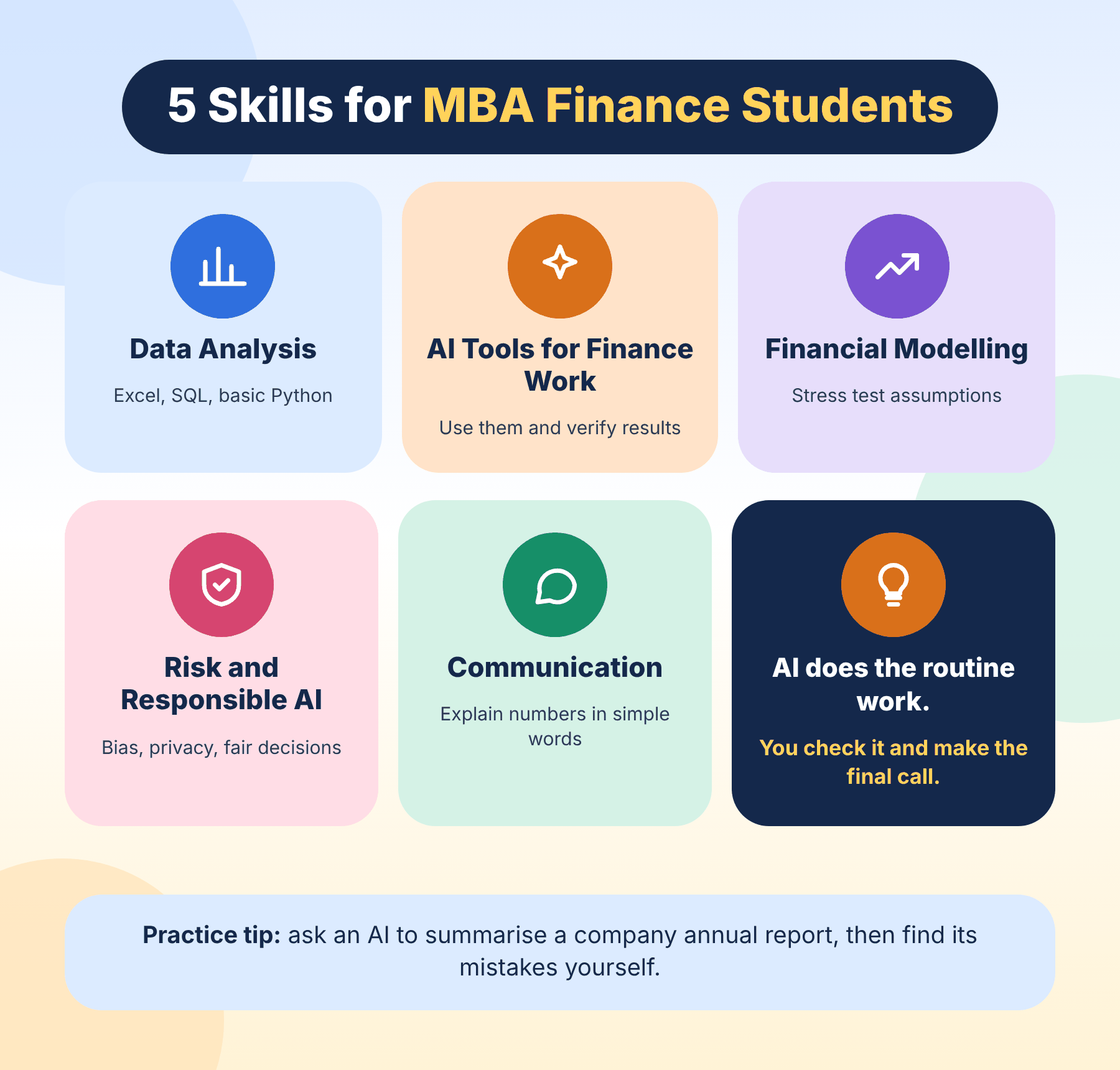
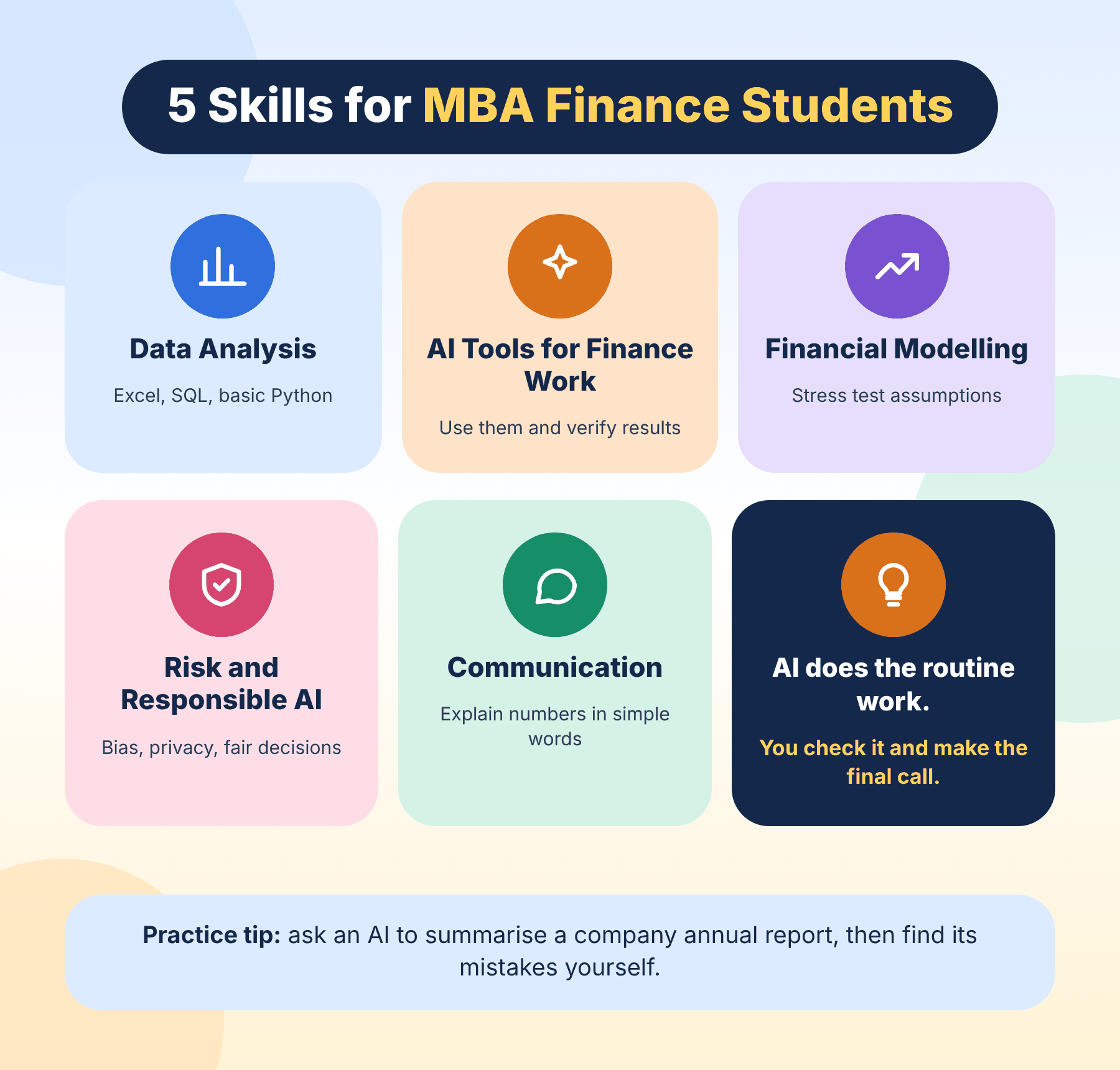
Data Analysis (Excel, SQL, Basic Python)
What to learn: Use of Excel for sorting and analyzing numbers, SQL for extracting information from business databases, and basic knowledge of Python for large data and quick calculations.
Why it matters now: AI functions based on data. You won’t be able to detect that something goes wrong with the outcome of the process unless you know how to work with the data. Most companies expect their finance team members to have such skills.
How to practice: Start with a free sample of a dataset and try answering three basic questions about it using Excel and later on with SQL.
Using AI Tools for Finance Work
What to learn: How to use AI tools to gather information about a company, prepare a report, prepare the first forecast and most importantly verify the results provided by the AI.
Why it matters now: It is common for teams to work with such tools and thus save timeIt is more advantageous to be the one who works efficiently with the output and recognizes any errors that have occurred rather than being the one to mindlessly repeat the output.
How to practice: Ask for an AI to provide you with a summary of the annual report of the company. Look at its mistakes yourself.
Financial Modelling and Judgment
What to learn: How to build a simple financial model, stress-test different scenarios like drop in sales or increase in cost, and test the assumptions made in the forecast.
Why it matters now: While AI can give a forecast within seconds, it is oblivious to the business situation of the company. Someone needs to make sure the numbers make sense.
How to Practice: Create a simple forecast for a small business firm and then change one assumption at a time and observe the result.
Risk, Compliance and Responsible AI
What to learn: The fundamentals of bias in AI, reasons for lack of transparency in certain AI decisions and how to protect customer data.
Why it matters now: Financial institutions and financial regulators are closely monitoring the use of AI technology. A mistake or an unjust decision may result in a fine or even loss of trust.
How to practice: Study a case of an unfair loan decision made by an algorithm and note which control measures could have identified it.
Communication and Business Partnering
What to learn: How to speak numbers in clear language to people who don't come from a finance background, such as a sales head or a founder.
Why it matters now: Since AI takes care of the number part, your worth lies in interpreting the numbers for the team and guiding them on what to do next.
How to practice: Pick one finance document and explain its meaning in three sentences to a friend with no finance background.
How to Check If an MBA Finance Syllabus Covers AI
Many colleges say they teach AI in online MBA Finance. But is it really in the course? The online MBA syllabus in Finance will show you. Open it and check these points.
Software that is listed in the syllabus: Look for software such as Python, Power BI, Tableau, and Excel. If you find it listed, then you will be taught about it.
Subjects related to data and analytics: Look for subjects related to data, forecasting, and financial analytics.
Additional subjects in AI or fintech: Check whether you can choose additional subjects in fintech or AI in finance.
Projects from industry or case studies: Find out whether there will be any projects with real companies.
Methods of Assessment: Check to find out what kind of marks are awarded. An ideal course awards marks based on projects and practicals.
Learning about responsible use of AI: Find out if they are going to teach responsible use of AI such as using data safely.
Ask for the full syllabus PDF and check your Online MBA eligibility before you pay.
How Atlas Online MBA Prepares You for AI in Finance
Atlas SkillTech University offers its online MBA for people who already have a job and want to grow in their career without leaving it. The program teaches regular management subjects and puts AI at the center, so you learn skills that finance companies want today.
The program has a few features that make it easier to study and use what you learn. You get an AI powered learning platform, industry projects and case studies to practise on real business problems, and career support to help you move ahead.
The AI part is built around three tracks. You do not need a tech background to follow them.
AI Knowledge Channel: This track explains everything about the AI itself and the way companies apply AI. When working in the finance industry, this track will help you master AI terms and be involved in decision-making regarding various AI technologies.
AI Product Real Use: This track shows you how to implement widely used AI technologies in your routine activities such as doing research, creating reports and developing plans. As a finance specialist, this track will help you save some time while checking data and writing reports.
AI Agents at Work: This track explains the capabilities of AI agents. Besides, here you will learn how to develop an AI agent for a real-life business case, like collecting information or making the first draft of your report.
Each track follows a Learn, Build, Outcome format. You learn the idea, build something with it, and end with a result you can show.
Conclusion
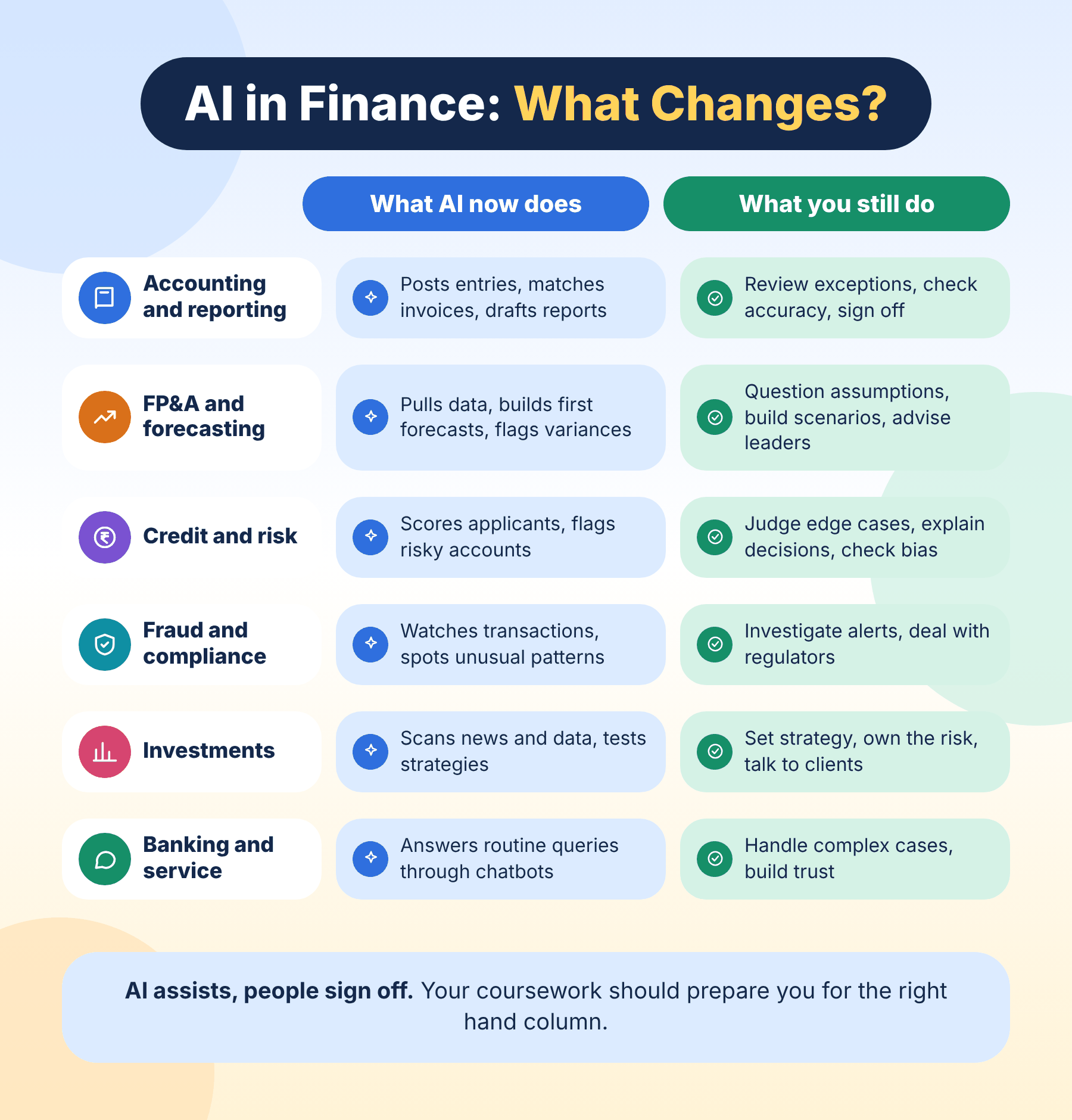
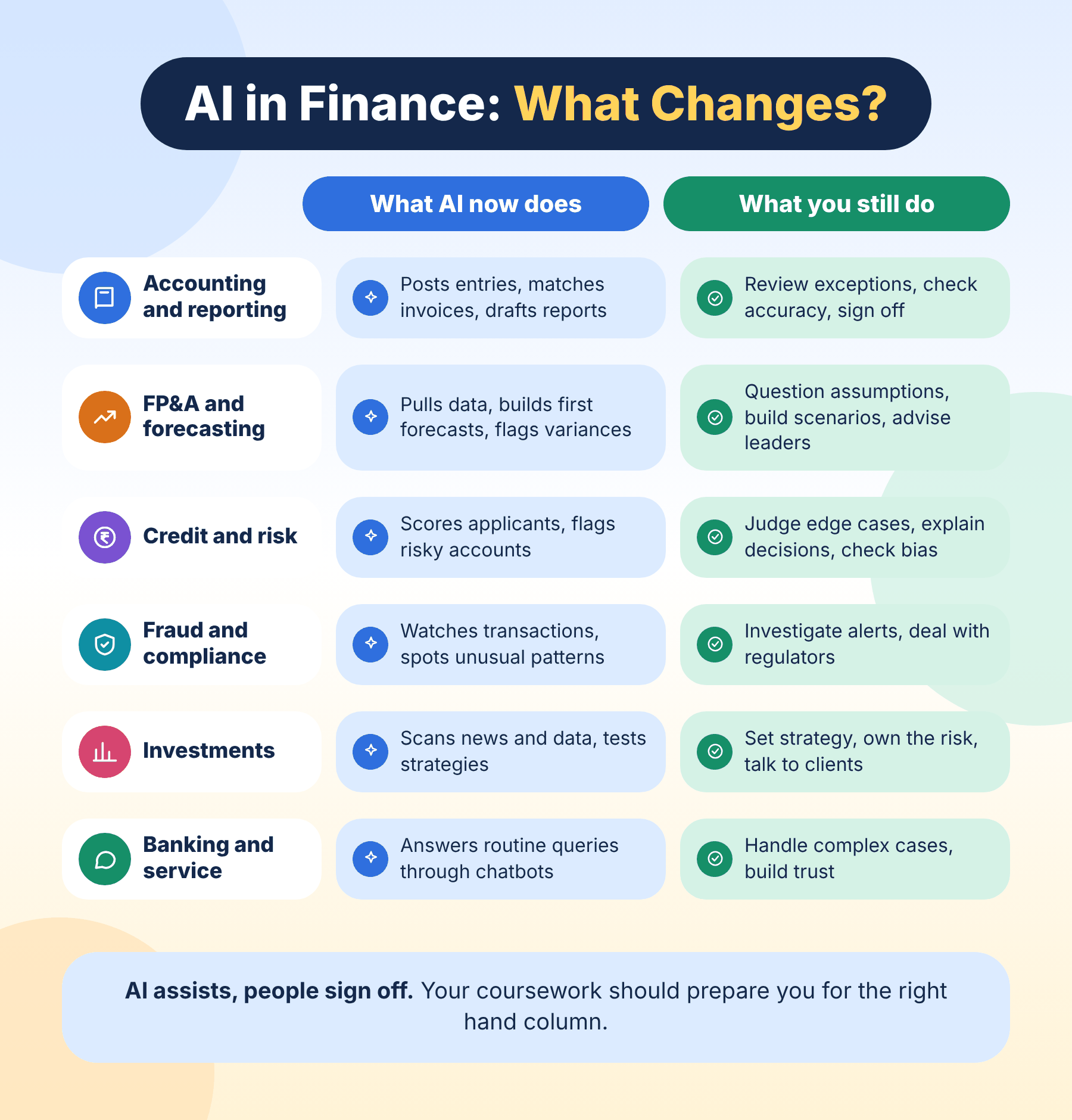
AI in finance is changing jobs, but it is not ending them. The routine work is moving to software, and people are needed to check the results and make the final call.
Here is a simple example. A finance team uses an AI tool to make a sales forecast in a few minutes. The numbers look good, but one assumption is wrong. The tool counted a big one-time order as regular monthly sales. A finance professional who knows the data, and knows how to question the result, will catch this before it reaches the boss.
This is the kind of skill the Atlas SkillTech University online MBA aims to build. In the AI Product Real Use track, you learn to use AI tools for reports and plans. With the Learn, Build, Outcome format, you practise on real problems and end with work you can show. So you learn to use AI, and also to check it.