


Key Highlights
Yes, you can take up an Online MBA after career break provided you fulfill all the eligibility criteria of the university like the recognised bachelor's degree and minimum marks. A career break does not necessarily make you ineligible for taking up an Online MBA.
Generally, the admission is based on your educational qualifications and university policies. You need to verify the age limit, work experience, program recognition and admission criteria before applying.
Select a specialization that is in line with your work experience and career objectives. Enhance your skills, create practical projects and gain confidence while doing your MBA.
To get back into your career, you need to update your CV and LinkedIn profile, be honest about your career break and look for appropriate job opportunities, including returnships when applicable. An Online MBA can enhance your employability but cannot guarantee a job.
The blog discusses the eligibility criteria, study break, age and work experience criteria and choosing the right specialisation. You will learn how to enhance your skills, create practical projects, explain your career break to the employer and find job opportunities after your Online MBA.
Can You Pursue an Online MBA After Career Break?
Yes, you may be able to pursue an Online MBA course after career break if you meet the program’s academic eligibility criteria. Admission usually depends on your graduation, your marks and the rules of the program, not on how long you have been away from work.
Degree first: Most online MBA programs start by asking for a recognised bachelor’s degree. If you have one, you have cleared the first and most important step.
Marks matter: Programs usually set a minimum score in your degree. At ATLAS SkillTech University Online, the listed requirement is 50% aggregate marks in a bachelor’s degree.
Gap length: How long you were away from work is usually not the main test. Academic records come first, but rules differ, so confirm them before applying.
Work experience: Some programs ask for it and some do not. ATLAS’s listed eligibility does not mention a mandatory work-experience requirement, but check the latest admission details.
No job guarantee: An MBA can refresh your knowledge and give you projects to show. It does not guarantee a job or erase a career gap.
Eligibility, Gap and Age Rules
Whether you are planning an MBA after career break or an MBA after 5 years gap in your career, the checks are mostly the same. Universities look at your degree, your marks and their own admission steps. Here is a simple checklist for an MBA after career break in India.
This table is about getting into the program. Getting hired is a separate matter. Employers look at your skills, past experience and interview performance, not just your admission.
A related question many students ask is: does a gap year after 12th affect MBA admission? The next section answers it.
Study Gap vs Career Break vs Work Experience
These three terms sound alike, but they mean different things. Colleges usually care about academic records, while employers care about your job history.
Example: Riya finished her degree, worked for 3 years and then took a 4-year break. Her study gap is none, her career break is 4 years and her work experience is 3 years.
So, does a gap year after 12th affect MBA admission? An MBA looks at your bachelor’s degree and marks, and a gap after 12th comes before that degree. The ATLAS page lists a recognised bachelor’s degree with 50% aggregate and does not mention gap rules. Confirm with a counsellor to be sure. A career break is also not counted as work experience automatically, so check how each university treats it.
Your Restart Plan: A Four-Phase Roadmap
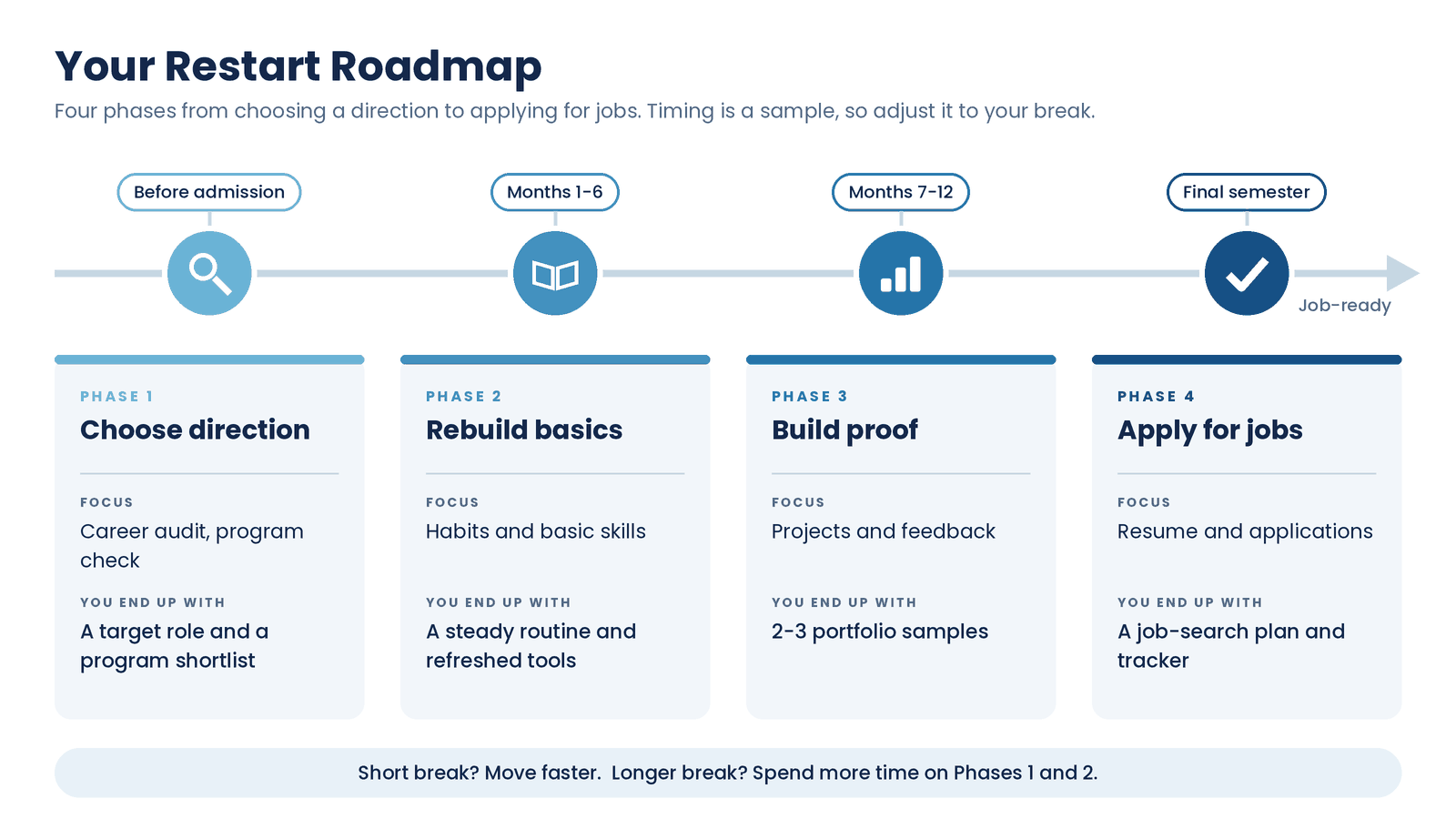
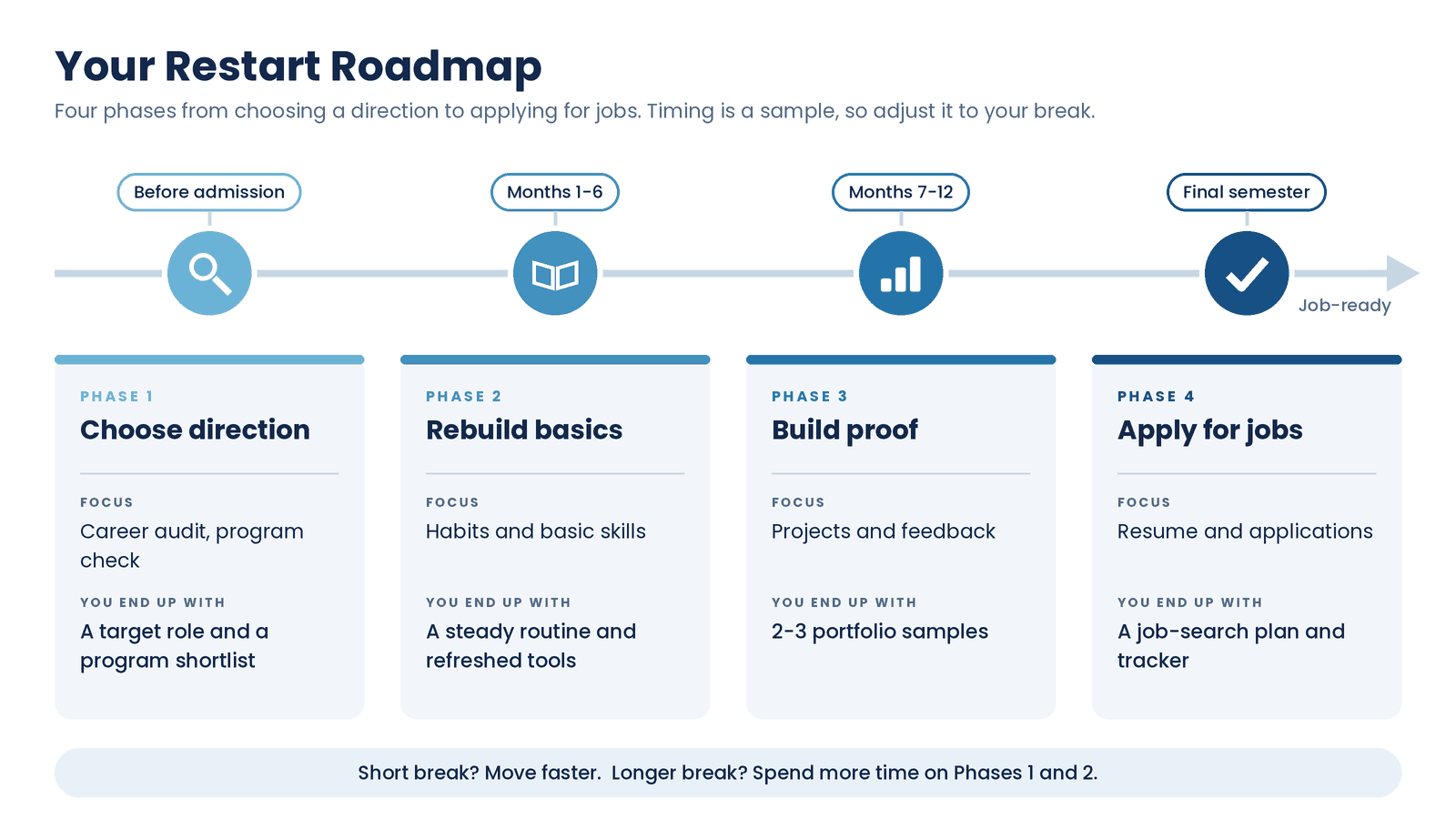
Think of your restart as four simple phases, from choosing a direction to applying for jobs. The timeline below is a sample, not a rule. Feel free to change the length depending on the length of the break, your daily schedule and desired role.
Phase 1, Prior to Enrollment: Understand your existing skillset, choose target roles and program comparison to avoid signing up for an incompatible program.
Phase 2, Months 1 to 6: Rebuild studying skills and sharpen the basic skills such as Excel, communication skills, and digital literacy. It is easier to do it bit by bit rather than all at once.
Phase 3, Months 7 to 12: Prepare 2 or 3 mini-projects related to your previous experience and target role. It helps to provide tangible proof of your work during the interviews.
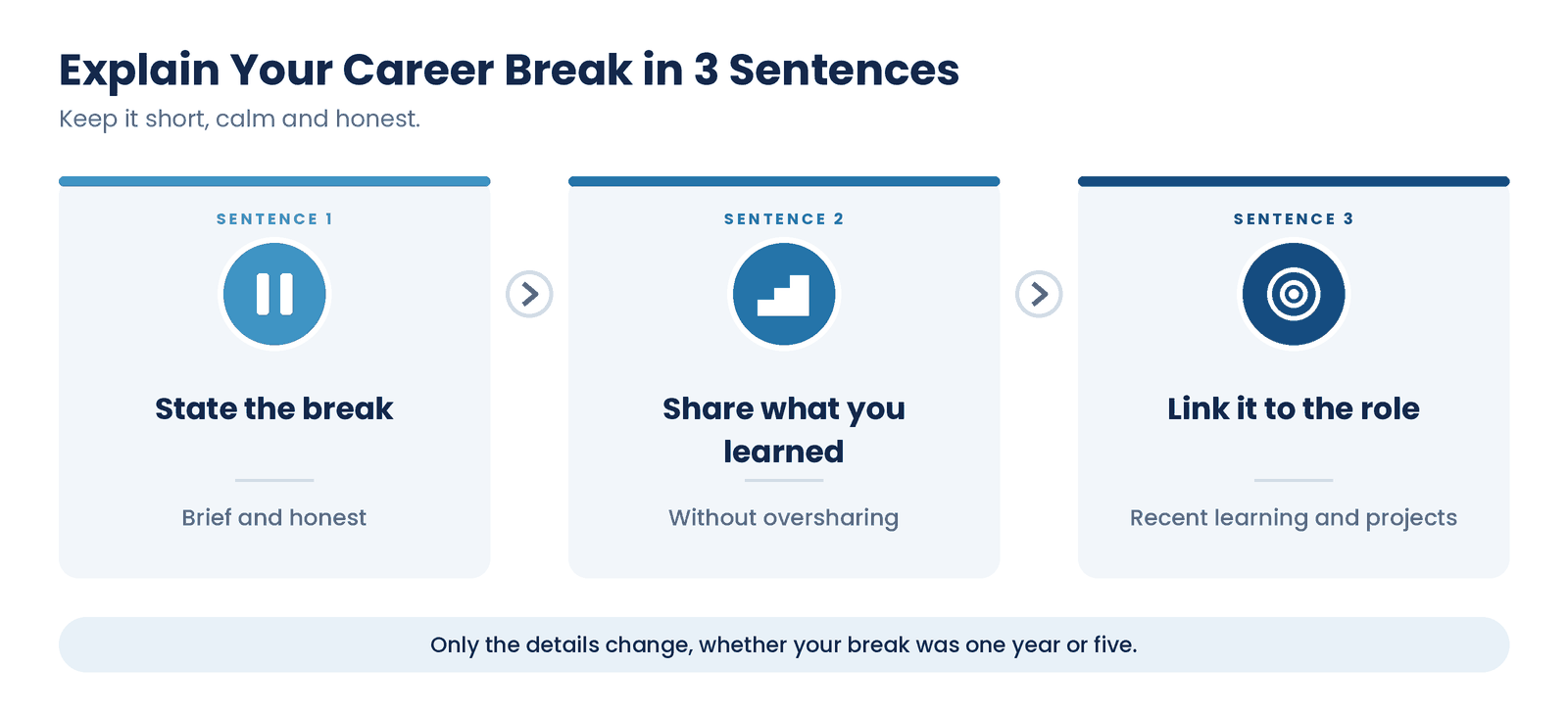
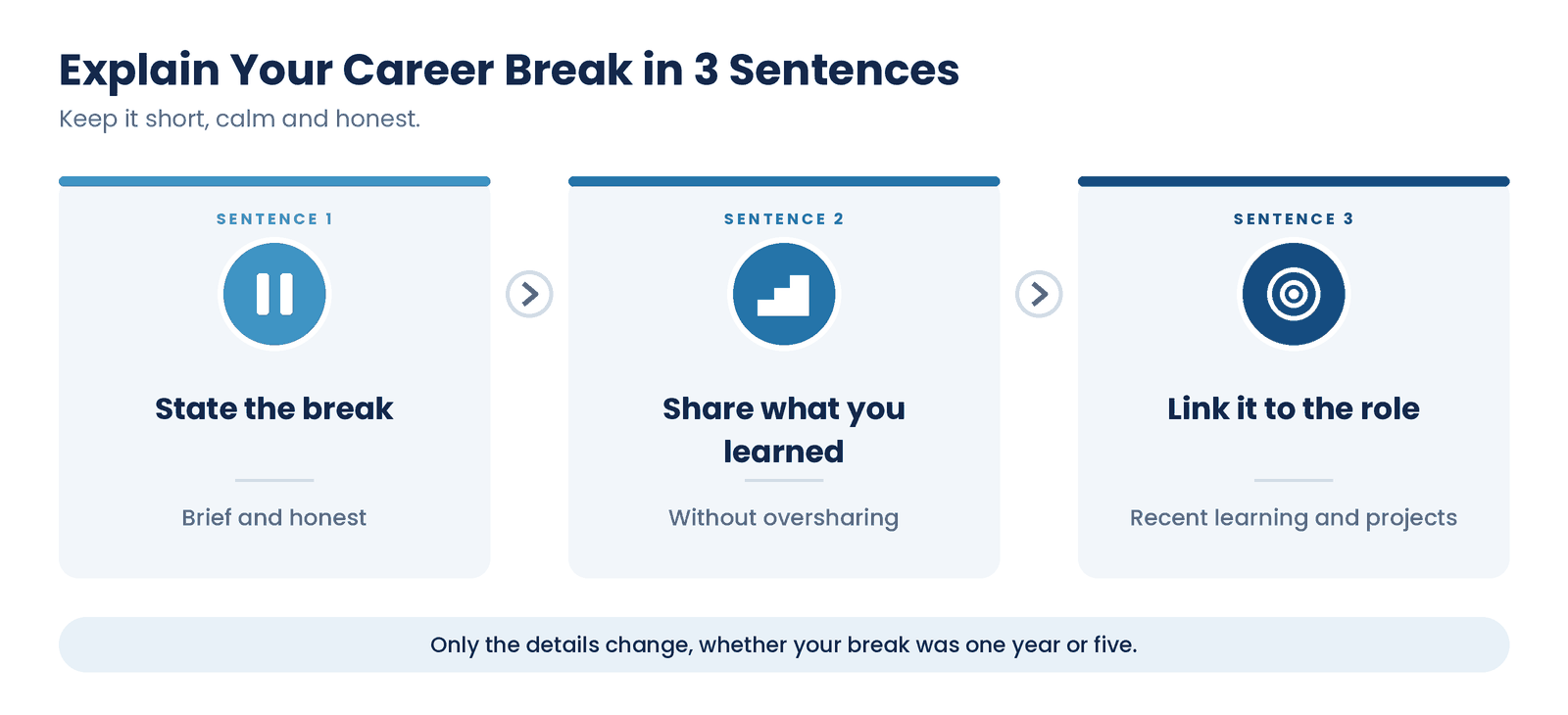
Phase 4, Final semester + Job search: Update your resume and prepare for your career break interview question.
A returner with a short break may move faster. Someone with a longer break may spend more time on Phase 1 and Phase 2.